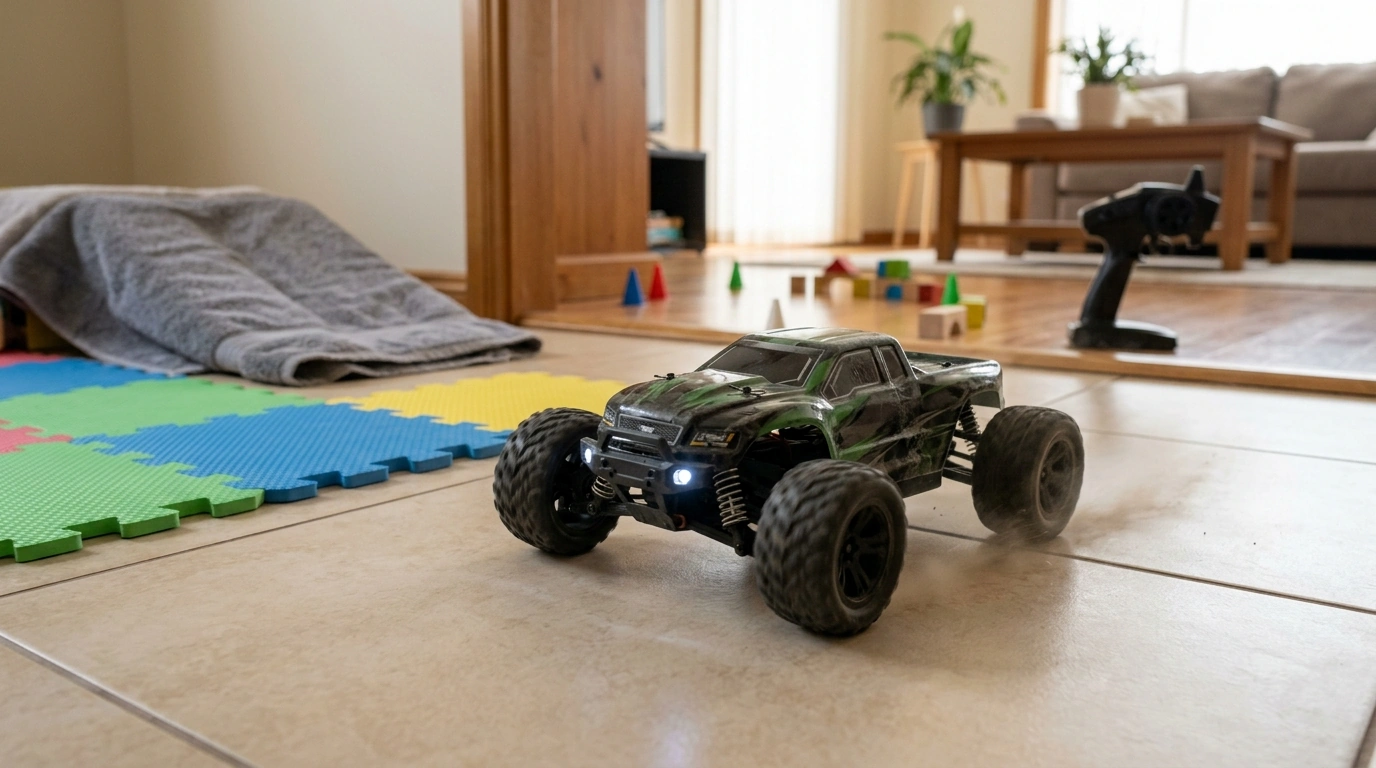
A compact 1:32 RC car is made for fast, low-stress sessions—quick turns on smooth floors, grippy runs over small bumps, and agile handling in tighter indoor spaces. The 1:32 RC Sports Car Off-Road Rock Crawler High-Speed Drift Remote Control Monster Truck leans into that “pick it up and drive” feel: simple controls, a confident stance, and enough clearance to keep the fun going when the surface isn’t perfect.
Whether the goal is drift-style slides across tile or controlled crawling over a towel “rock section,” a micro RC like this shines when the terrain is varied but not extreme.
This size class is all about convenience and quick setup. It’s easy to run in living rooms, hallways, driveways, or a small backyard course without needing a large track or specialized equipment.
Where you drive matters more than “top speed” claims. Micro RC cars feel dramatically different depending on friction, bumps, and debris. Use smooth surfaces for speed and slide control, then graduate to slightly rougher areas once throttle control feels natural.
| Surface | Handling feel | Quick tip |
|---|---|---|
| Tile / sealed floor | Fast and slide-friendly | Use gentle throttle to prevent spin-outs |
| Low-pile carpet | More grip, slower top speed | Steer earlier; expect tighter, controlled turns |
| Sidewalk / smooth asphalt | Balanced speed and grip | Make a simple figure-8 course to practice |
| Rug edges / small thresholds | Bumpy transitions | Approach at a slight angle and moderate speed |
The most satisfying “all-terrain” sessions come from switching driving styles, not forcing one style everywhere. A few small technique changes can make the car feel more stable and predictable.
With 1:32 scale RC cars, performance is less about brute power and more about how controllable the vehicle feels on real household surfaces.
A simple course turns “driving around” into skill-building play. Keep it soft, moveable, and easy to reset—especially indoors.
Small RC cars are easy to grab and go, but basic battery habits and toy-safety practices help keep performance consistent and sessions worry-free.
For broader toy safety guidance, review resources from the U.S. Consumer Product Safety Commission (CPSC) and the ASTM F963 toy safety standard overview.
If you’re building a gift bundle, you can pair the RC car with a small add-on that’s easy to wrap, like Personalized Letter Necklace or Opal Stone Sterling Silver Stud Earrings.
Yes—low-pile carpet and smooth outdoor pavement tend to work best for stable control. Avoid deep grass, loose sand, and water to keep handling smooth and reduce wear.
Use gentle throttle first, initiate the turn with a quick steering input, and then modulate power to maintain the slide. As you exit the corner, straighten the wheels slightly while easing into acceleration.
Set up a simple figure-8 with two cup “gates,” then add a short bumpy section using a folded towel. It’s an easy way to practice steering timing, throttle control, and transitions over small obstacles.

Leave a comment