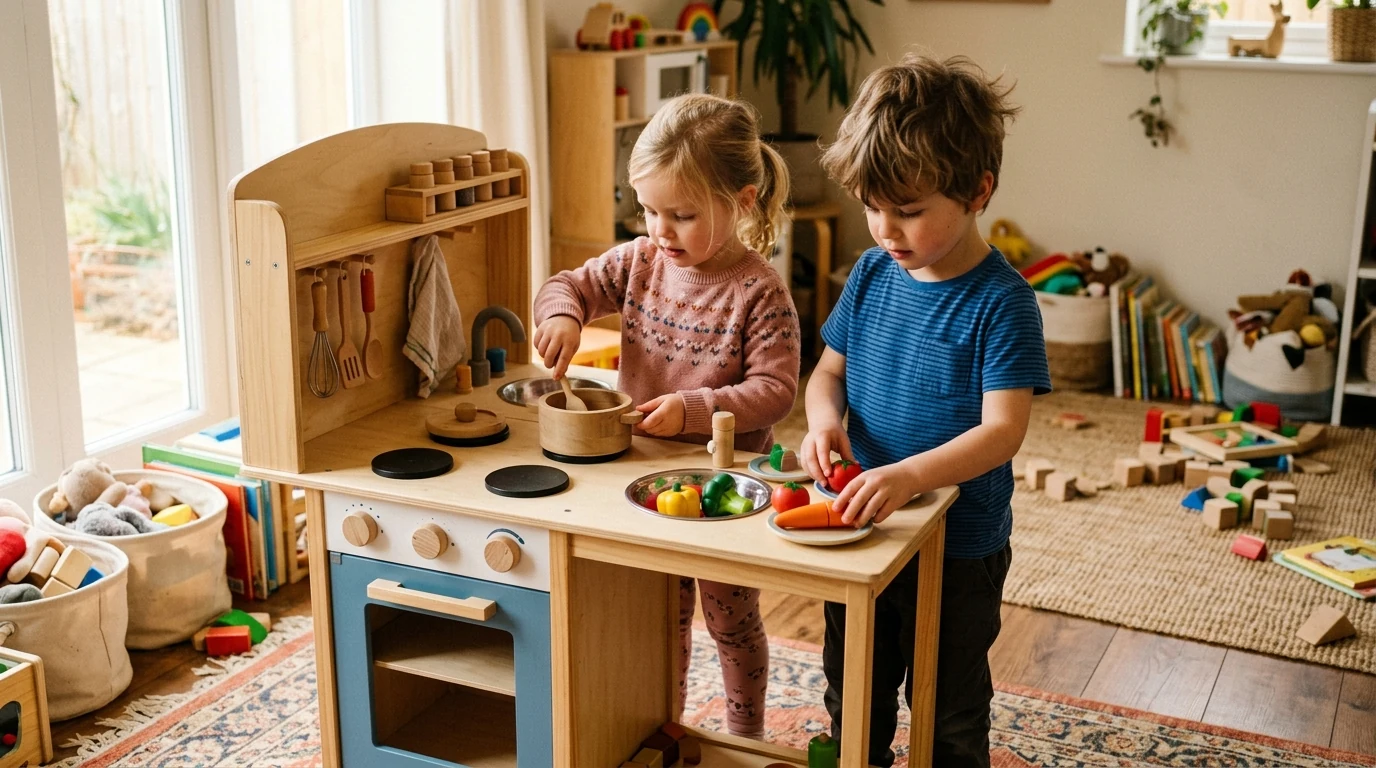
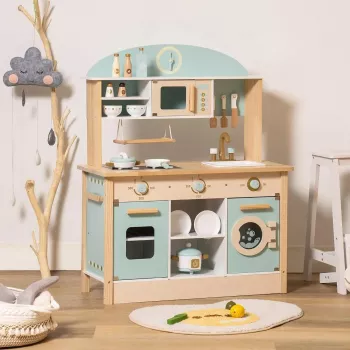
A play kitchen is more than a cute corner in the playroom—it’s a daily invitation to make up stories, practice routines, and play together. Our wooden play kitchen set for kids with accessories is designed for screen-free pretend play for girls and boys ages 3+, giving little chefs a place to “cook,” serve, tidy up, and repeat (because repetition is where so much learning sticks). For more guidance, see 8 Best Wooden Play Kitchen Sets For Toddlers and Kids ….
Some toys get used for a week; others become part of everyday life. A wooden play kitchen often lands in the second category because it keeps offering new ways to play as your child grows. For further reading, see PairPear Wooden Play Food Cutting Seafood Set.
Play is also widely recognized as a cornerstone of healthy development. If you enjoy the “why” behind pretend play, the American Academy of Pediatrics’ guidance on play is a helpful reference point.
When you watch a child “make dinner,” you’re seeing a bundle of skills happen at once—communication, coordination, and confidence-building all wrapped into play.
For a quick snapshot of age-range development from 3–5, the CDC developmental milestones can help you connect play behaviors to what kids are learning at these ages.
A play kitchen can be fun on its own, but accessories are what turn “turn the knob” into “we’re hosting a café and the baby is the customer.” That’s why we love sets that come with a variety of pieces from day one.
Before you bring a kitchen set home, a few quick checks can make the difference between “cute but crowded” and “used every day.”
| What to check | Why it matters | Good fit if you want… |
|---|---|---|
| Footprint & height | Helps kids play comfortably and keeps the play area tidy | A kitchen that fits the corner you’ve set aside |
| Accessory set | More items can spark longer, richer pretend play | A toy that feels “complete” out of the box |
| Storage spaces | Supports independence and clean-up habits | A daily play station that doesn’t take over the room |
| Stability | Prevents tipping or wobbling during active play | Confident play for energetic kids |
| Group play friendliness | Better for siblings or playdates | A shared toy that reduces turn-taking conflicts |
Ages 3+ are a strong starting point because kids can use accessories more safely and stay engaged in longer storylines. Many children keep using a play kitchen for years as pretend play becomes more detailed. If younger siblings are around, supervise closely and keep age-appropriate pieces within reach.
Accessories reduce “play friction” by giving kids the tools they need to cook, serve, and clean without stopping to improvise every step. With more props, you’ll often see longer play sessions, richer storytelling, and more opportunities to practice turn-taking and conversation.
Set up a defined kitchen station with easy-to-reach storage so your child can start and finish a play loop on their own. Try rotating a few accessories weekly to keep interest high, and use simple role cards like “chef” and “customer” to help your child jump in without needing prompts.


Leave a comment