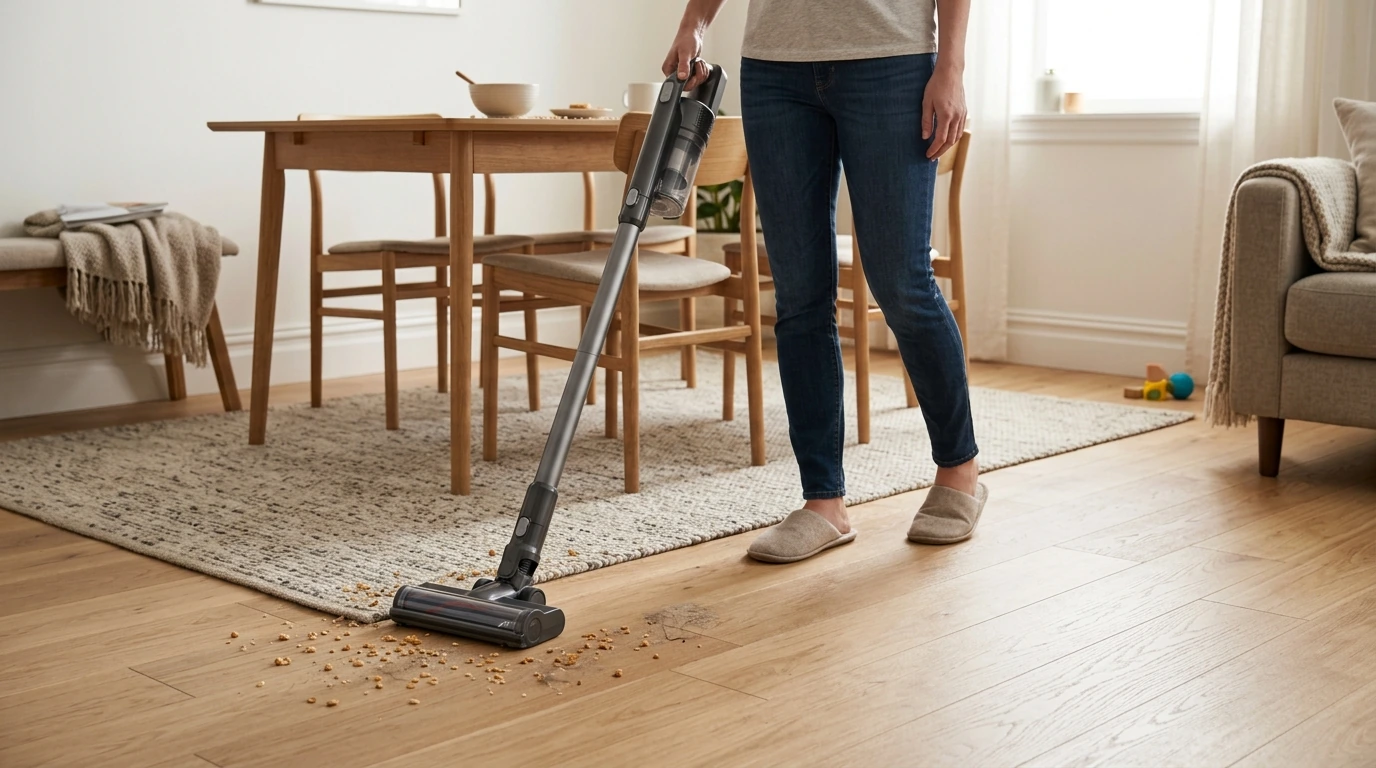
A cordless stick vacuum can make quick cleanups faster and full-room passes less of a hassle—especially in apartments, busy family homes, and spaces with stairs. A 350W-class cordless stick vacuum is built for the kind of mess that shows up every day: crumbs after breakfast, pet hair along baseboards, tracked-in dust by the door, and dry debris that collects under tables and sofas. The right model won’t replace every cleaning tool, but it can make staying “caught up” feel much more manageable.
Below is a practical breakdown of what a 350W cordless stick vacuum is best at, what to check before buying, and how to keep performance consistent over time.
What a 350W cordless stick vacuum is best for
- Fast daily maintenance: Kitchens, entryways, dining areas, and high-traffic paths where debris appears quickly.
- Spot cleaning between deeper cleans: Keeps floors looking fresh without hauling out a bulky upright or canister.
- Stairs and tight spaces: Cord-free handling makes steps, corners, and quick passes under furniture far easier.
- Light-to-moderate debris loads: Crumbs, hair, dust, and small litter-like particles on hard floors and low-pile rugs.
- When to choose a different tool: Thick carpets, heavy renovation dust, or large wet spills are better handled by a dedicated carpet machine or a wet/dry vacuum.
Key features to look at before buying
- Motor power and suction design: Wattage offers a clue, but pickup depends just as much on airflow design, brush head engineering, and how well the system seals.
- Battery and charging details: Look for clear expectations on recharge time, whether the battery is removable, and how runtime changes when you switch to higher suction modes.
- Filtration and sealing: Fine-particle filtration and well-sealed airflow help reduce recirculated dust—especially helpful in homes with allergies or pets. For background on indoor irritants and air quality, see the EPA’s Indoor Air Quality resources and the CDC’s guidance on asthma triggers.
- Brush head and floor compatibility: Hard floors often do best with gentler contact to avoid scattering; rugs typically need more agitation to lift hair and grit.
- Dustbin capacity and emptying: A bin that empties cleanly can reduce dust plumes. If you vacuum often, an easier emptying mechanism matters as much as size.
- Noise and comfort: Head swivel, handle angle, and weight distribution often affect fatigue more than a small difference in total weight.
- Attachments for real-life messes: Crevice tools for edges, upholstery tools for furniture, and mini motorized heads for pet hair hotspots can expand what a stick vac can do.
Quick comparison: stick vacuum vs. upright vs. robot
Each type of vacuum solves a different problem. A cordless stick vacuum focuses on convenience and speed; uprights and canisters tend to win on deep carpet performance; robot vacuums shine at routine maintenance but still need help for stairs and edges.
Everyday cleaning options at a glance
| Option |
Best for |
Typical trade-offs |
| Cordless stick vacuum (350W class) |
Quick daily cleanups, stairs, mixed surfaces |
Runtime depends on mode; smaller dustbin |
| Upright or canister vacuum |
Deep carpet cleaning, longer whole-home sessions |
Bulkier storage; more setup effort |
| Robot vacuum |
Hands-off maintenance cleaning on open floors |
Struggles with stairs/edges; may need pre-tidying |
Getting the most from a cordless stick vacuum on different floors
- Hard floors (tile, wood, laminate): Use a setting that minimizes scatter. Slower passes help capture fine dust instead of pushing it ahead of the head.
- Low-pile rugs: Use a brush setting that lifts hair and grit. Overlap your lanes slightly to prevent visible “missed lines.”
- Edges and baseboards: Follow up with a quick crevice-tool pass. Floor heads often leave a thin line of dust along wall edges.
- Under furniture: Keep the wand angle shallow and use the lowest head profile available to reach farther under sofas and beds.
- Pet hair: Short, repeated passes usually work better than pressing down. Brush roll cleaning keeps pickup from gradually fading.
If indoor dust is a recurring concern, it helps to think about particles rather than just “visible dirt.” Organizations like AHAM explain particle removal concepts (often discussed for air cleaners) that are useful context when comparing filtration and fine-dust control.
Care and maintenance that keeps performance steady
The 350W Cordless Stick Vacuum Cleaner is a practical match for daily upkeep where convenience matters as much as power. Cordless handling supports quick pickups in kitchens, living rooms, and stair areas—without stopping to swap outlets or wrestle a heavier vacuum out of a closet.
Who should buy it (and who should skip it)
More in-stock picks
FAQ
How long should a cordless stick vacuum run on a full charge?
Runtime varies by power mode and floor type, with higher suction settings reducing run time noticeably. For most homes, it’s smart to use the standard mode for open areas and save boost for problem spots like entryways or rugs.
Are cordless stick vacuums good for pet hair?
Yes—especially for routine pickup on hard floors and low-pile rugs. Consistent results depend on a brush roll that can lift hair and on regular cleaning of the roller and filters so airflow doesn’t drop.
How often should the filter be cleaned or replaced?
In pet-heavy or dusty households, check filters weekly and clean as needed; in lighter-use homes, every few weeks is often enough. Follow the product manual for whether filters are washable and for the recommended replacement interval.
Recommended for you

Leave a comment