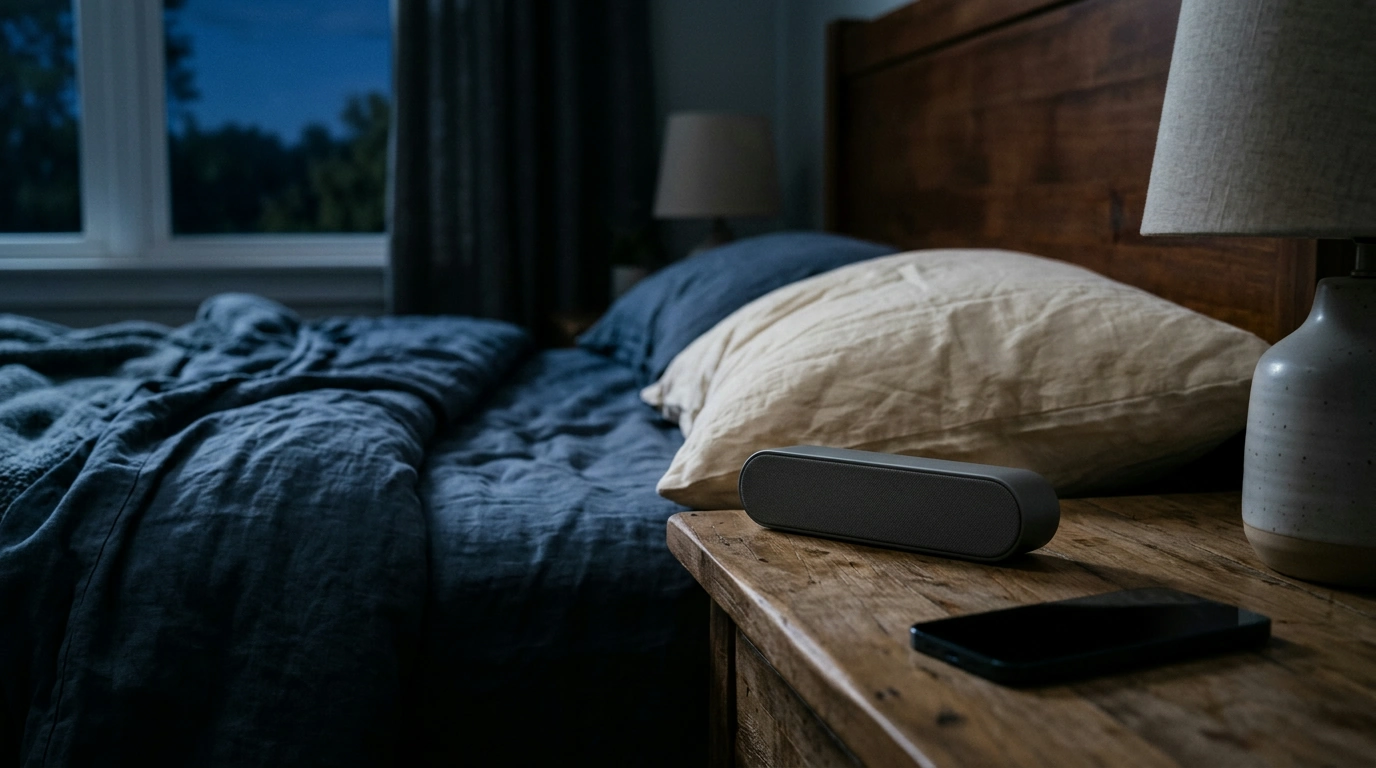
The best choice for most people is a slim, pillow-friendly speaker that keeps your ears uncovered, plays clearly at a low volume, and has a sleep timer. If you specifically want bone conduction, look for a device designed to rest against your head rather than a speaker that simply plays through the pillow. The distinction matters: a pillow speaker uses ordinary sound, while bone conduction transfers vibrations through contact with your head.
We recommend starting with how you sleep. If you stay in one position and want private audio without anything in your ears, a compact bone conduction unit may suit you. If you move around a lot, a flat pillow speaker may be easier to use because its placement is less precise. Either way, a low-profile shape matters more at bedtime than maximum volume.
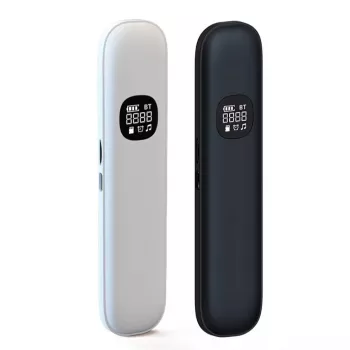
Choose a speaker you can operate in the dark. Simple volume controls and an automatic shutoff timer make it easier to start a podcast, audiobook, or calming audio without leaving it on all night. Bluetooth is useful for streaming from your phone; a wired connection may appeal to you if you prefer not to manage charging.
Pay attention to comfort at your usual pillow height. A hard or raised edge can become noticeable when you lie on your side, even if the speaker sounds good while you are sitting up. For a contact-based bone conduction model, secure, gentle placement also helps maintain consistent sound without pressing the device tightly against your head.
We would choose a low-profile model with a timer, straightforward controls, and enough volume for clear speech at a quiet setting. We would not choose based on a “bone conduction” label alone. Decide first whether you want audio transmitted through direct contact or a small speaker you can position under or beside your pillow.
For a closer look at the features that matter for bedtime listening, see our guide to bone conduction sleep soundbars, Bluetooth, and timers. Keep the volume at the lowest level that lets you follow the audio, and use the timer to limit unnecessary playback.
A true bone conduction speaker needs direct contact with your head to work as intended. If you want to place a device under your pillow, choose a pillow speaker made to transmit ordinary sound through the fabric instead.





Leave a comment