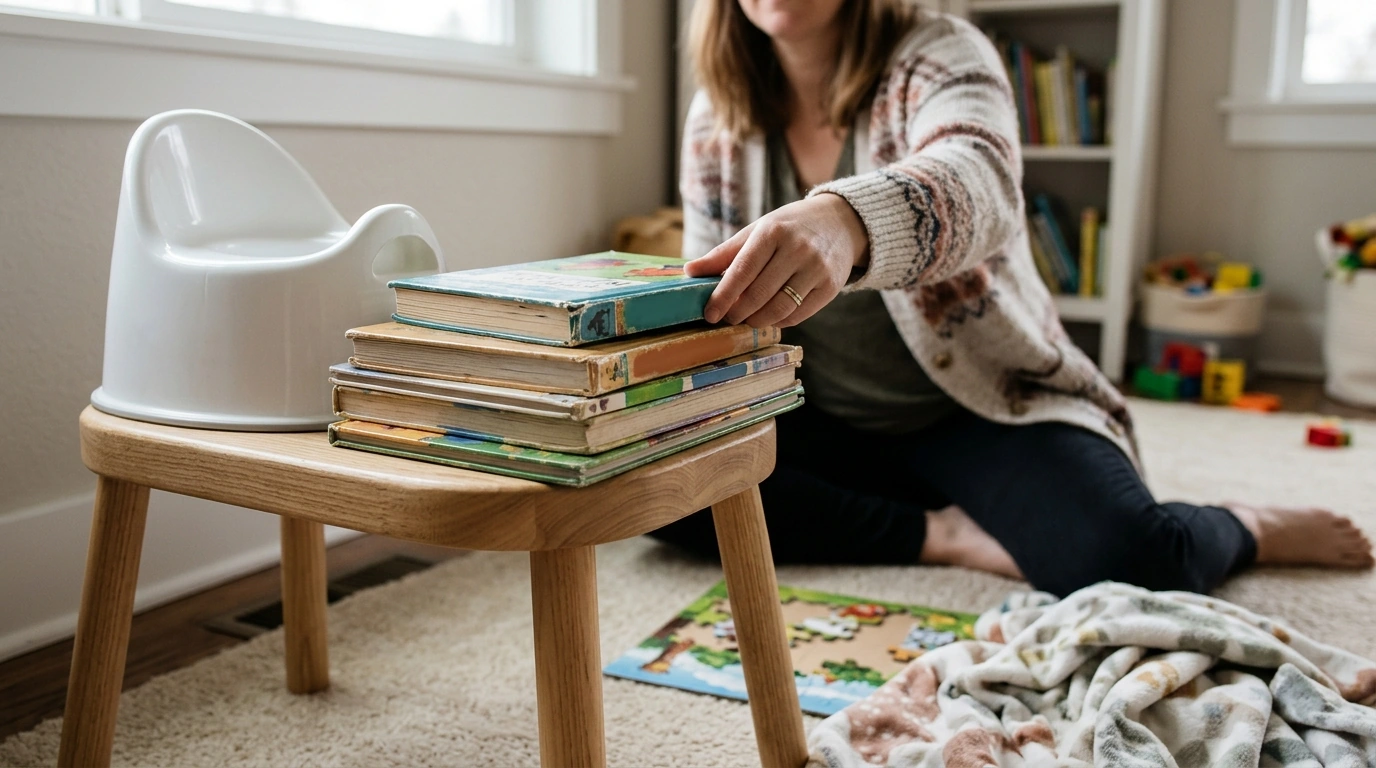
For many parents, Oh Crap! Potty Training by Jamie Glowacki is a strong first pick. It gives you a clear, practical approach to moving away from diapers, explains what to do when accidents happen, and helps you stay consistent without turning every trip to the bathroom into a negotiation.
The best book for your family, though, is one whose approach you can actually follow. Glowacki’s method asks for focused time at the start. If you cannot set aside that time, or you want a gentler pace, choose a guide that supports gradual practice instead of trying to force a short timeline to work.
Look for instructions you can put into practice on an ordinary day, not just a promise that your child will be trained by a certain date. A useful parent guide should cover readiness signs, how to introduce the potty, what to say during accidents, and how to handle common setbacks. It should also distinguish daytime learning from staying dry overnight; those milestones do not always arrive together.
We suggest reading a book’s basic plan before you buy it. Consider whether your child’s caregivers can use the same language and routine, and whether the plan fits your work schedule. Consistency matters more than following a book perfectly. If an approach leaves you or your child distressed, it is reasonable to pause and adjust.
Pick one main guide so you are not juggling conflicting instructions. Then make a simple plan: keep a potty accessible, dress your child in clothes they can remove easily, offer predictable chances to try, and respond calmly to accidents. Praise effort and communication rather than demanding a result every time.
Before you begin, our team recommends looking at readiness alongside your schedule. Your child does not need to meet a perfect checklist, but showing interest, noticing a wet or dirty diaper, or being able to communicate a need can make practice easier. Our potty training readiness guide and checklist can help you turn those observations into a workable plan. If your child is withholding stool, seems to be in pain, or has persistent constipation, ask their pediatrician for guidance rather than pushing ahead with a book’s timeline.
Look for growing awareness of when they need to go, interest in the bathroom, and an ability to follow simple directions or communicate their needs. You can start introducing the potty gently before all of those signs are in place.





Leave a comment