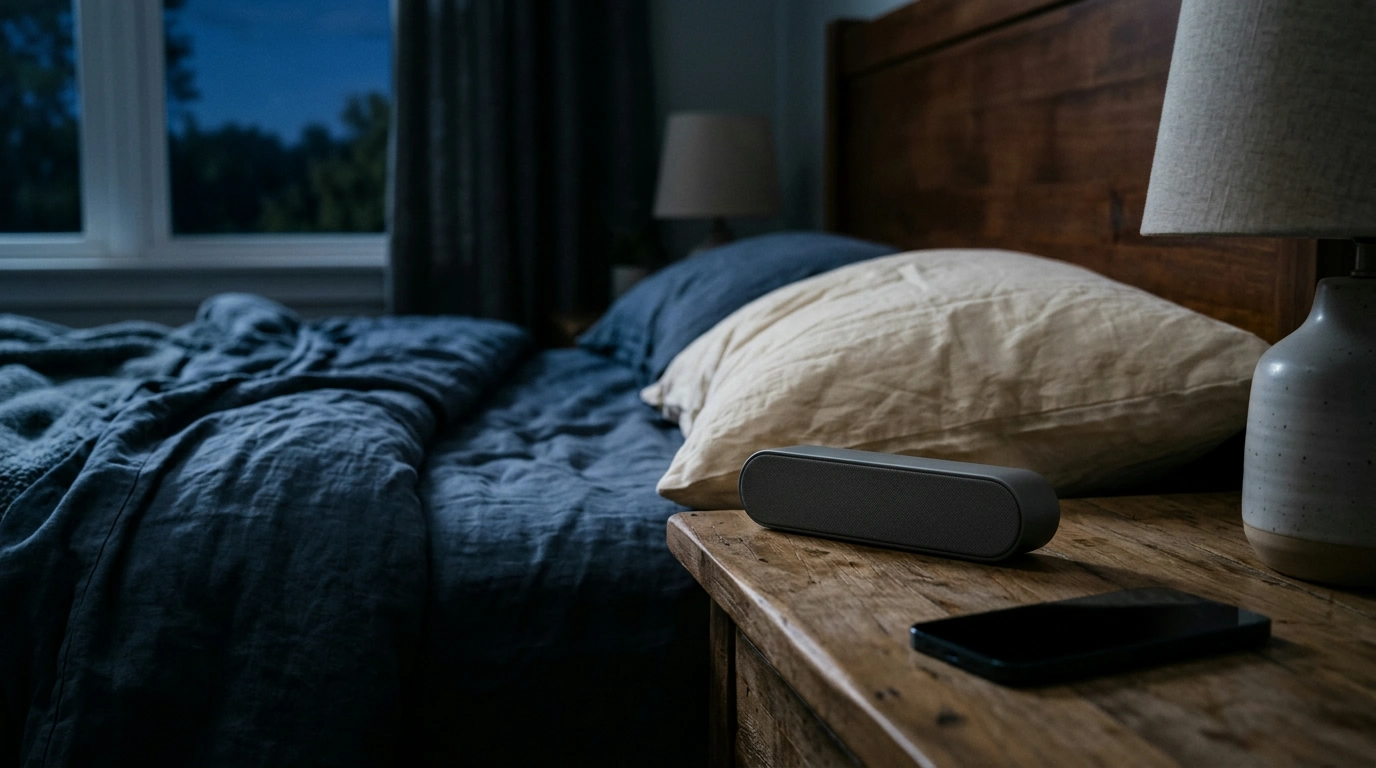
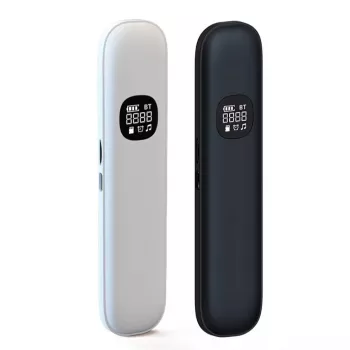
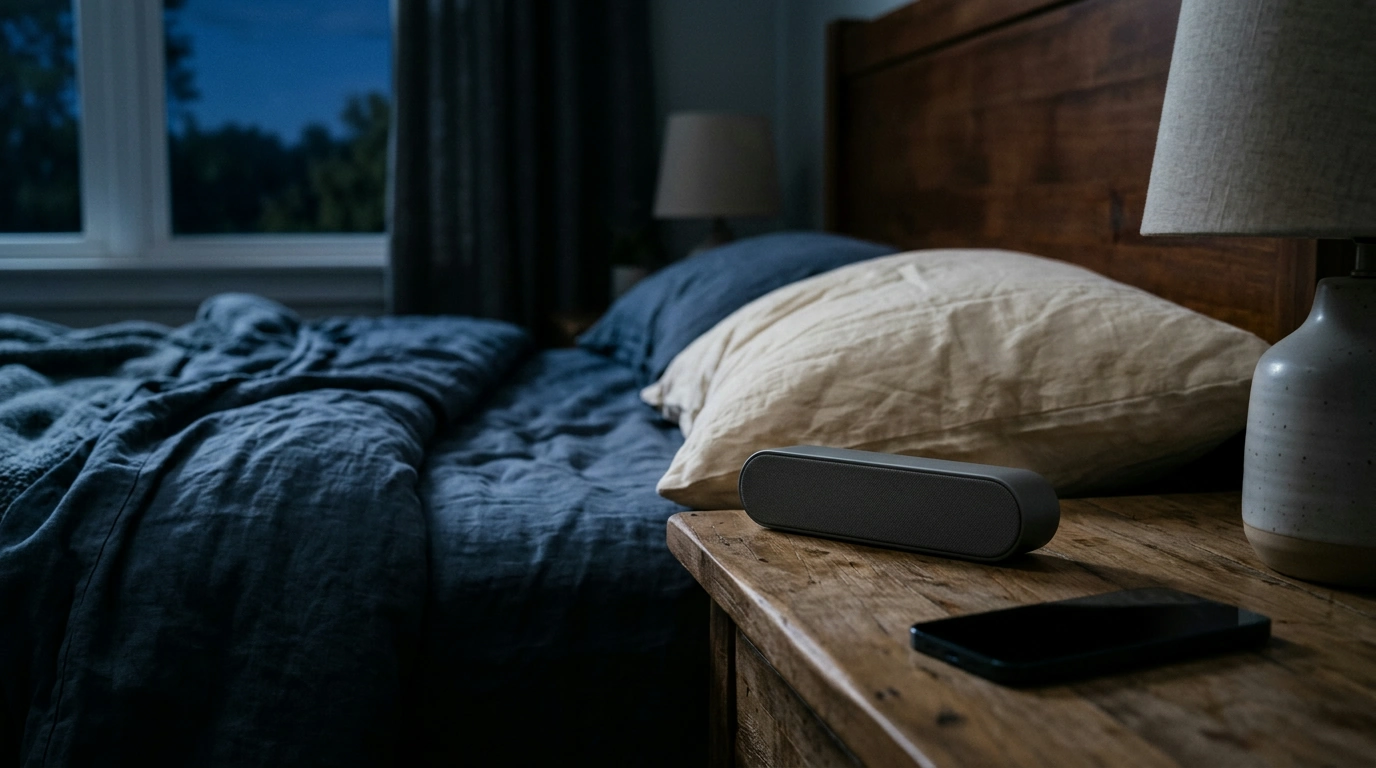
A bone conduction sleep speaker is designed for low-distraction listening at night—combining gentle sound delivery, a built-in timer, and Bluetooth playback in a compact soundbar format. It can help mask household or street noise, support bedtime routines, and reduce the need for in-ear earbuds while trying to rest.
Sleep-focused soundbars are built around a simple goal: make it easier to settle in and stay settled once you’re drifting off. Instead of pushing big bass or room-shaking volume, the emphasis is on steady, comfortable audio and easy controls that make sense when the lights are out.
Bone conduction transmits vibrations through contact points, allowing sound perception without needing traditional in-ear placement. At bedtime, that “different” delivery can be appealing if earbuds feel intrusive—especially for side sleepers who dislike pressure inside the ear canal.
Because placement matters, a small change—moving the soundbar a few inches, adjusting the surface underneath, or angling it toward the bed—can noticeably change what you hear (and what someone else in the room hears).
The best sleep speaker features are the ones that reduce effort at night. A timer prevents all-night playback when you don’t want it, and stable Bluetooth makes it easy to keep a consistent routine without constant re-pairing.
For sleep habits, volume and consistency matter. The American Academy of Sleep Medicine’s guidance on healthy sleep habits highlights the value of stable routines—something a timer-enabled sound setup can support when used thoughtfully.
Getting started usually takes just a few minutes, but dialing in the “right” feel can take a night or two of small adjustments. The goal is steady masking—audible enough to smooth out disruptions, not so loud that it becomes the thing keeping you awake.
| Option | Best For | Potential Downsides | Notes |
|---|---|---|---|
| Bone conduction sleep speaker (soundbar-style) | People who want timer control and wireless playback without in-ear buds | Placement-sensitive; may not isolate sound like earbuds | Works well for white noise and gentle audio near the bed |
| In-ear earbuds | Personal audio with minimal room sound | Can be uncomfortable for side sleepers; ear pressure over time | Choose sleep-focused tips or low-profile designs if used overnight |
| Standard bedside Bluetooth speaker | Room-filling sound and music playback | May disturb partners/roommates; no dedicated sleep features | Timer may require phone app rather than built-in controls |
| Pillow speaker (wired) | Direct, quiet listening with minimal room noise | Cables can be inconvenient; limited device compatibility | Often best for single-sleeper setups |
For hearing health, it’s smart to avoid loud listening over long stretches. The National Institute on Deafness and Other Communication Disorders provides an overview of noise-induced hearing loss and why safer volume habits matter.
Some models include built-in sound modes (like white noise), while others rely mainly on Bluetooth streaming. Check the playback options to confirm whether it can run standalone or needs a connected device.
Many people use white noise nightly, especially for masking unpredictable sounds. Keep the volume moderate and consider using a timer so it turns off after you fall asleep, and seek medical guidance if sleep problems persist.
Many sleepers prefer 15–60 minutes, depending on how long it typically takes to drift off. Try a few settings for a week and choose the shortest timer that still helps you fall asleep comfortably.




Leave a comment