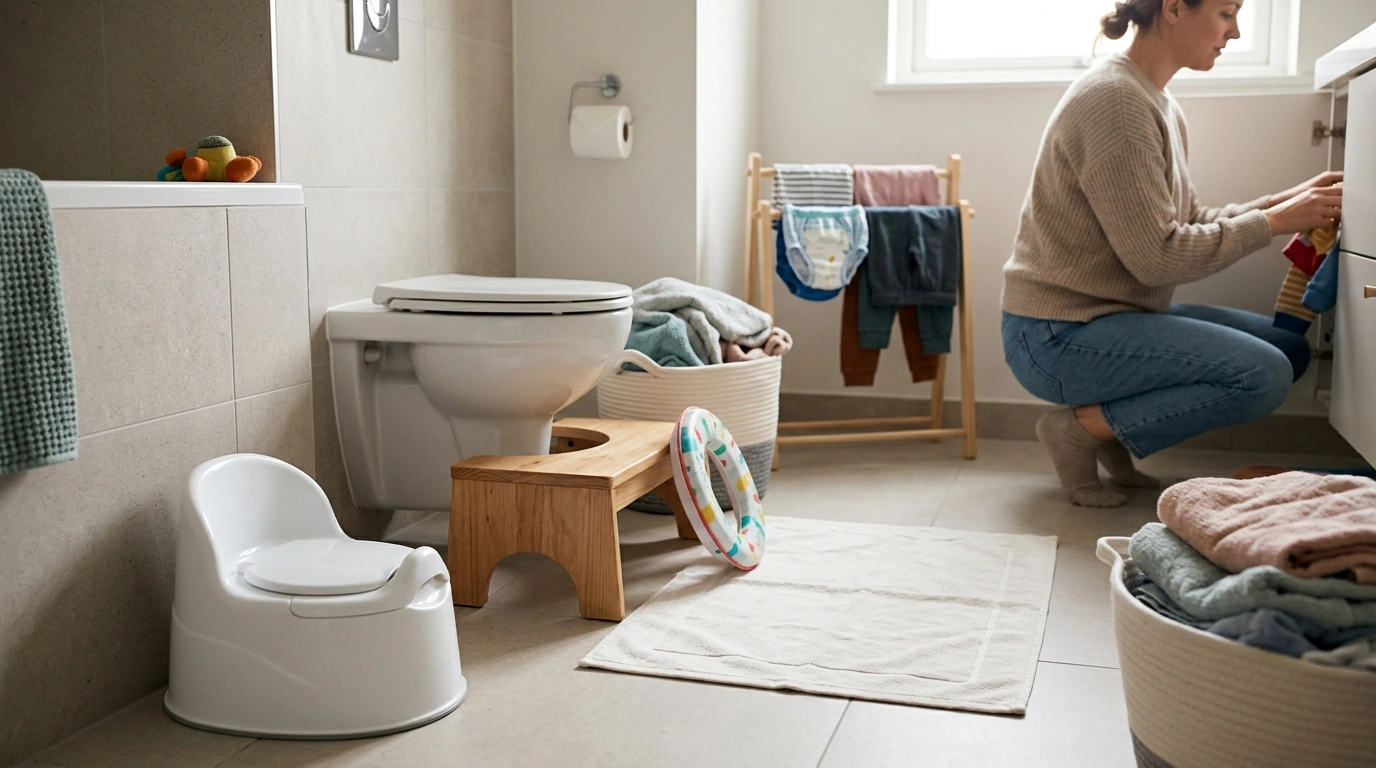
The “333 rule” is a simple, parent-friendly structure some families use to keep potty training consistent: 3 days to introduce the routine, 3 weeks to build the habit, and up to 3 months for it to feel truly automatic in everyday life. It’s not a strict deadline for your child; it’s a planning tool for you so expectations stay realistic and your approach stays steady.
These first days are about repetition and quick learning. Our team recommends picking a low-stress window at home, using easy-off pants, and keeping the potty visible. Offer frequent sits (like after waking, before leaving the house, and 15–30 minutes after meals), watch for signals, and use the same simple phrase each time (“Potty time”). Accidents are normal here—treat them as information, not failure.
Over the next few weeks, you’re building pattern recognition: body signal → go to potty → finish → wash hands. Keep timing predictable, but start spacing reminders slightly so your child has chances to notice the urge. If you’re using rewards, keep them small, immediate, and consistent, and pair them with praise for effort (trying, sitting, telling you) rather than only for results.
This is the “real life” phase—car rides, errands, preschool, naps, and busy days. Plan for prevention: use a travel potty or seat reducer, pack extra clothes, and build a pre-exit bathroom stop into every outing. Night training often lags behind daytime control, so focus on daytime mastery first and protect sleep with appropriate overnight options until your child is ready.
If your child can stay dry for stretches, follow simple directions, and shows interest in the bathroom, this framework can keep you organized without pushing too hard. For a full readiness checklist and a step-by-step plan our team uses, visit our complete guide here: https://camarini.com/guide-ai-potty-training-guide-readiness-plan-checklist/.
Many kids are ready when they stay dry for longer periods, can pull pants up and down with help, follow basic directions, and show curiosity about the bathroom or discomfort with wet diapers.






Leave a comment